
Farm Business & Operations
New Berry Varieties Arriving Spring 2019

The United States's oldest berry breeding program has announced the release of two new varieties: a strawberry and a raspberry named "Dickens" and "Crimson Treasure", respectively. Available for planting in spring 2019, these berries are claimed by their breeder at Cornell University to grow large with vibrant colours that maintain "peak flavor far longer than most heritage varieties".
New Canada Food Guide Emphasizes Fruit & Veggie Consumption

The government of Canada presented a dramatic overhaul of their Food Guide this week, encouraging fruit and vegetable consumption while reducing previous guides' emphases on meat and dairy. What are the new dietary recommendations and how much of an impact on Canadians' buying behaviour can fruit and vegetable growers can really expect from the new Guide? Read below to find out in this week's blog post.
New Software Updates Archive

Croptracker makes it easy to keep up with your farm. Now, we're making it easier to keep up with Croptracker! Prompted by your feedback, we're making software update announcements readily available over several different channels.
Check out the new Software Updates archive, found on the Support & Training page. This page will list every single update, big or small, for your reference. Every software update will also be posted as they happen to our Facebook and Twitter pages (make sure you follow us so you never miss a post!). If you're subscribed to our mailing list (scroll to the bottom right of this page if you're not!) you will also receive a weekly Software Update newsletter.
NZ's Largest Apple Exporter Implements Croptracker

Croptracker, Inc. is excited to announce a long-term adoption and service level agreement of its crop management and record-keeping software by Mr Apple New Zealand Ltd. Mr Apple is New Zealand’s largest fully-integrated grower, packer, and marketer of apples.
OAG & OTFG Spring Training Day - Wednesday, March 7th

It's almost Spring Training Day! Are you a member of the Ontario Apple Growers or Ontario Tender Fruit Growers and attending our workshop on Wednesday, March 7th?
OAG/OTF Spring Training Day Next Week!

The Ontario Apple Growers Association and Ontario Tender Fruit Growers Association would like to invite you to attend a one-on-one CropTracker training workshop next week. Would you like to learn more about how to use CropTracker and what it can offer? If so, you may be interested in attending this workshop which will provide a hands-on, one-on-one training approach from one of Croptracker's developers.
On Farm Weather Stations in Precision Agriculture

The development of agriculture has always been closely tied to the interpretation and prediction of weather. The first standard rain gauge was developed in 1441 and since then, humans have been attempting to better predict the weather using increasingly advanced tools to protect their crops.
Organic Farming: Navigating Legislation
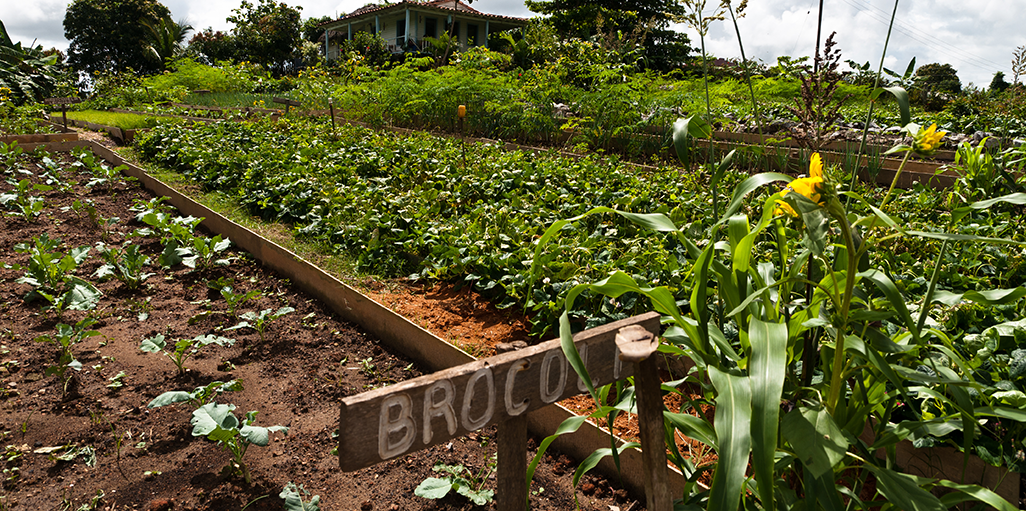
Organic farming must adhere to the regulations and standards in your region as well as where your produce may be exported. Oftentimes organic standards will consist of production practice standards and permitted substances lists, and applicants must adhere to these standards for three years before selling their produce as “organic”. Organic record keeping must be maintained to prove no prohibited substances were used on the land or crops; production plans or organic system plans also required by certification bodies can include input documentation, seed sources, a five-year history, harvest records, and more. Where do these guidelines stem from, and how does it look in practice?
Organic Produce Reaches Highest-Ever Market Share

A market once considered small and niche, organic produce now accounts for 2.6% of global market sales for food and beverage - a large jump from the 1.7% share it held in 2012. These gains are expected to continue, with global organic food and beverages sales slated to reach 323.56 billion USD by 2024.
Organic Vegetable Production Jumped in 2018

The number of farms devoting more than half of its acreage to organic production leapt almost 15 percentage points in 2018, reveals Growing Produce's 2019 State of the Vegetable Industry report.
Pro-Tip: Setting an Event Status

Our top tips from developers, and users like you to help make the most of our software.
Protecting Crops in Summer

Last month, an extreme heatwave broke records and sweltered citizens across Australia. The six days between January 12 and 17 rank within the country's ten hottest days ever, with temperatures soaring to a height of 49.1 degrees Celsius (120 degrees Fahrenheit). The town of Marble Bar in Northwetern Australia suffered 20 consecutive days of above 40 degrees Celsius temperatures.
Blisteringly high temperatures are as rough on plants as they are on us. Kris Werner, head of Dried Tree Fruits Australia, even reported that the heat has been cooking his stonefruit on their branches. "[The fruit] burn on the inside, they become squashy and you can't use them," he told the Australian Broadcasting Corporation. Says Lockyer Valley Growers president Michael Sippel, "Everyone is in survival mode right now, keeping water up to the crops they have and hoping the temperatures will turn."
Of course, Australia's devastating heat conditions are rare. However hot, dry, and sunny conditions of a lesser severity can still cause stress and weaknesses in even the toughest plant. UV radiation can cause sub-lethal injury on leaves and sunburn fruit, which leads to damaged appearance and internal quality. Intense sunlight can cause photosynthesis to slow down or stop, resulting in less manufactured carbohydrates, which can reduce yields and fruit quality. Drought stress will reduce fruit size and stunt growth especially in young trees. In today's blog post, the follow-up to our earlier post Protecting Crops in Winter, we discuss different ways in which growers protect their crops from brutally warm temperatures, sunlight, and drought conditions.
Protecting Crops In Winter

“What good is the warmth of summer, without the cold of winter to give it sweetness.” - John Steinbeck.
It's true that fruit growers rely on the cooler temperatures of winter to ultimately produce the best yields. When winters are too warm, fruit struggles to ripen and halt new leaf growth. Cooler temperatures bring fruit to maturity, enhance their colour, and improve their flavour.
But too-cold temperatures can spell disaster for growers. 2019 has seen growers in the Northern Hemisphere contend with particularly frigid winter conditions. California's Central Valley's $2 billion citrus crop was threatened earlier this month when a hard freeze warning went into effect. In some areas, temperatures reached 24 to 25 degrees (27 degrees [-2.78 degrees Celsius] is the point where ice crystals can start to form internally in the fruit).
In today's blog post, we discuss different ways - from heaters to sprinkler systems, from spray-on "winter jackets" to even helicopters - that growers protect their crops from brutal winter temperatures.
Robotic Technologies In Agriculture

For any sector to thrive, disruptive technologies and innovations must fall into place. In agriculture, farmers constantly seek new ways to increase the yield per acre, and at the same time, deal with rising input costs. Investment and innovation in robotics has been a big focus in agriculture recently, with reports from Wintergreen Research projecting an anticipated $16.3B market size by 2020.
Rugged Battery Pack Round-Up: ideal for farming!

Long days outside mean you’re going to have to charge up one way or another. Having a weather resistant power source for your work in the field is key to ensuring your data tracking and communications are uninterrupted. We’ve highlighted some currently available portable batteries and power banks of note that aim to pass the test of your day to day needs.
Rural Connectivity Problems & Croptracker's Upcoming Offline Mode

Growers can’t make the most of exciting new ag tools like crop management software without the most basic broadband speeds. However, many growers around the world are still stuck in Internet blackout zones. In today's blog post we discuss the digital divide in 3 different countries, and how Croptracker is working the bridge the gap in spring 2019.
SaaS? ERP? Quick facts about subscription tools for your business

If online tool adoption feels a little overwhelming, that’s understandable. Determining what would be most effective for a growing or distribution operation that’s historically relied upon paper tracking and Excel can be daunting, especially when acronyms are peppered throughout feature descriptions.
Self-Esteem Linked to 'Ugly' Produce Purchases

Recent research has indicated that self-esteem is linked to consumer's likeliness to buy blemished or otherwise less-than perfect fruits and vegetables. In a study published by Dartmouth’s Tuck School of Business, buying "unattractive" produce was shown to negatively affect shoppers' self-image, which therefore makes them less willing to purchase it as opposed to more attractive - albeit equally safe - produce.
Software Update Roundup: April - May 2019

Croptracker is always growing: let's take a look at some of our new features this month.
Software Update Roundup: April - May 2020
Croptracker is always growing: let's take a look at some of our new features this month.
Request your free private demo now!
Let our expert staff walk you through the Croptracker system, and answer any questions you have.
We are here to help.