
Farm Records:
For today’s fruit and vegetable growers, keeping detailed farm records is as crucial to operations as planting, pruning, and harvesting. Farm records can include any of the following: expenses, labor-tracking, chemical/pesticide uses, harvest and crop yield records, planting records, shipping records, FSMA and GlobalGAP compliance records, traceability records, and more. Software applications devoted to farm record keeping can help growers to keep more accurate and up to date records, and eliminate storage and organization hassles associated with paper records.
Why Keep Farm Records:
Employee Management and Time Tracking:
Accurate employee and personnel records must be kept to ensure that full and part time employees, temporary and casual workers, and foreign workers are paid appropriately. For operations that rely on temporary foreign workers for harvest and planting labor, additional information needs to be collected to ensure that employees are offered, and work sufficient hours to meet the guidelines laid out in their work visas. Without accurate records, growers run the risk of losing access to workers applying with these visas in the future. In the United States alone there are over 242 000 H-2A temporary agricultural workers, making them an essential part of the growing and harvest processes.
Spray and Chemical Records:
Chemical and pesticide application records are required by law in various capacities depending on your country and region. In the United States for example, pesticide use is restricted by legislation known as the 1990 Farm Bill which states that “all private applicators (those who apply pesticides to their own land) must maintain records of restricted-use pesticide (RUP) applications.” Chemical use tracking is crucial not only to managing an operation’s expenses, but for food safety and maximum residue limit compliance.
Irrigation:
For growers who rely on irrigation, water source, permit information, and water testing records are required to ensure water quality. These standards are in place to prevent illnesses from water borne contaminants such as e coli. Irrigation audits, surveys, and water use analyses are a legal requirement, and are performed and enforced regionally.
Harvest and Packing Records:
With different crops growing in different blocks and multiple varieties growing at the same time, many growers like details on where their best and worst harvest yields are coming from. In addition to this, packing fruits and vegetables has become more expensive to manage and many growers like to understand the efficiency of their packing operations on a daily or even hourly basis. Software that can provide these growers with yield reports and packing reports can help these growers better understand where and how they are making money.
Record Keeping Methods:
With all this need for report and record creation at every aspect of operations, growers have been challenged to keep their records in order.
Keeping Paper Records:
The challenge of using paper to store records is not only the time and effort to enter information, but also the storage space and organization required to be able to find and recall information when it is needed by managers and auditors.
Most growers already understand this challenge of using paper, as 80% of U.S. farms already invest in technological products and services that assist them in creating and/or managing their records.
Keeping Spreadsheet Records:
Some growers have evolved from paper to Excel and other desktop applications, that can reduce the time and storage space necessary to keep appropriate farm records. The challenge with the desktop applications is that the data is still stored in a centralized environment like a hard drive that can be compromised in an orchard or farm environment.
Record Keeping with Farm Record Keeping Software:
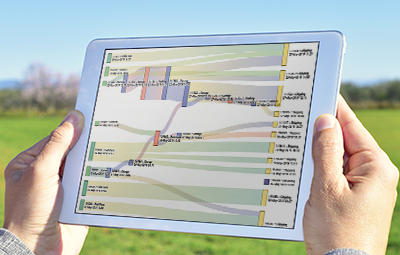
Other growers have chosen to utilise mobile and cloud-based applications that can be recorded from many different devices, consolidated, and stored on cloud-based database storage services like Amazon Web Services. Many of these software programs can not only safely store your records, but automatically generate reports to turn data into valuable insights for your operation.
How Record Keeping Software Helps Growers:
With in depth records, time spent on administrative work such as payroll and audits can be drastically reduced. Better records create a better understanding of the strengths, weaknesses, and productivity levels around the farm, and help growers to comply with legal and administrative requirements in their regions.
Using a farm record keeping software can help growers to eliminate some of the hassles associated with recording and paperwork, and help them to make the most of their farm data to make informed decisions going forward.