
Labor & Workforce
Revitalizing Agriculture: Trends and Strategies for Labor Shortages in 2025

The agricultural sector continues to grapple with persistent labor shortages, a challenge expected to intensify further in 2025. This issue, driven by an aging workforce, declining interest from younger generations in farming, and complex immigration policies, necessitates a multi-faceted approach involving advanced technology, comprehensive policy reform, and innovative workforce strategies to ensure a sustainable future for food production.
Save Hundreds of Hours: Make Managing your Workers Easy

Croptracker’s Work Crew Activity and Farm Labor Tracking module will Solve your Administrative Headaches
Did you know? You can save hundreds of hours of work a week with Croptracker’s Work Crew Activity and Farm Labor Tracking module is packed with industry beating features at an industry beating price.
Seasonal Farm Labor Issues in Canada

Canada has a reputation for being a technologically advanced nation when it comes to producing crops, with 160.2 million acres of farmland recorded in 2011 . Despite the ever-growing demand for agricultural production and smart farming technology to produce more food as efficiently as possible, growers in Canada are facing an unprecedented labor shortage.
Setting Up a Secure Punch Clock Kiosk - How to Keep Your Device Locked to a Single Page

Some users use the Punch Clock's Kiosk mode in the Croptracker app to set up a stationary device where employees can badge themselves in and out. It's good to know how to "lock" this device so that no one unauthorized can navigate away from the app page. Here's how to achieve this so that your Croptracker app and rest of your device remains secure.
Sidestep rural internet connectivity issues with Offline Mode

According to the United Nation’s International Telecommunication Unit (ITU) in 2019, only 38% of homes in rural areas had access to the internet. Growers and distributors’ operations are more often located in areas that can be considered rural or remote – frequently meaning that there’s less reliable (if not non-existent) internet connectivity access for workers and local residents.
Sowing Efficiency: Addressing Labor Challenges in Large-Scale Agriculture

Labor tracking and employee management on any sized farm operation is always a challenge, but it is particularly difficult as the size of the operation increases. Labor is generally the largest expense for fruit and vegetable growers and as the scale of an operation grows, finding ways to save money and boost efficiency is essential. Managing many farms at once, across large regions or even across different countries creates many unique challenges. Finding the right tools to help make timekeeping, productivity tracking, payroll calculations, and employee management possible on this scale is vital or the task quickly becomes unmanageable. This article will explore some of the unique challenges facing commercial agriculture companies and how centralized, digitized farm management software can help.
Spotlight on Worker Safety

One of Croptracker's chief goals is improving safety in the produce industry, not only for consumers but for the growers and farm workers who feed them. The global agriculture industry's injury and illness rates are some of the highest in the world, so improving the way our software facilitates worker safety is a priority we're dedicated to pursuing.
Temporary Agriculture Internships Can Have Lasting Benefits

It's back-to-school season in the Northern hemisphere, and also a popular time for growers to start taking on student interns.
The Changing Face of Farm Labor

With increasing urbanization around the globe, the agricultural sector is facing an unprecedented crunch in labor costs and acquisition. Countries like the US, New Zealand, and Canada are already facing the farm labor crisis. Labor shortages and aging populations are some important factors that we need to consider when discussing the changing issues of labor costs.
The Farm Labor Crunch: Tips for Ag Employers to Boost Productivity and Profitability

Operating a farm is complicated and being an Ag employer complicates it further, bringing unique and ongoing challenges that have little to do with growing food. The work needed to grow, package and sell high-quality produce is already never-ending, making the burden of HR administrative overhead tasks much more formidable. Many growers and ag industry employers echo complaints about the daunting task of organizing labour efficiently including: documenting work done, handling complicated payroll processes, fielding worker disputes, and meeting labor reporting demands.
Traceability and Labor: The Challenges of Berry Harvesting
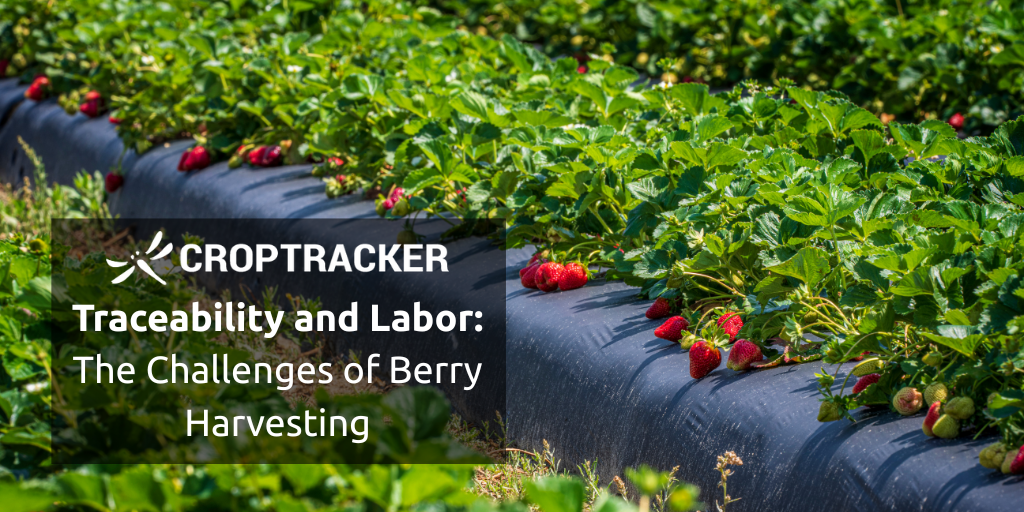
This blog is part one of a series on berry harvest. Part one on the challenges of harvesting berries by hand. Part two offers solutions to some of these challenges using Croptracker. Find part 2, Croptracker Feature Use Case: Speed Scanning for Berry Harvest here.
Request your free private demo now!
Let our expert staff walk you through the Croptracker system, and answer any questions you have.
We are here to help.