
Harvest & Quality Control
Tech round up: portable Brix meters
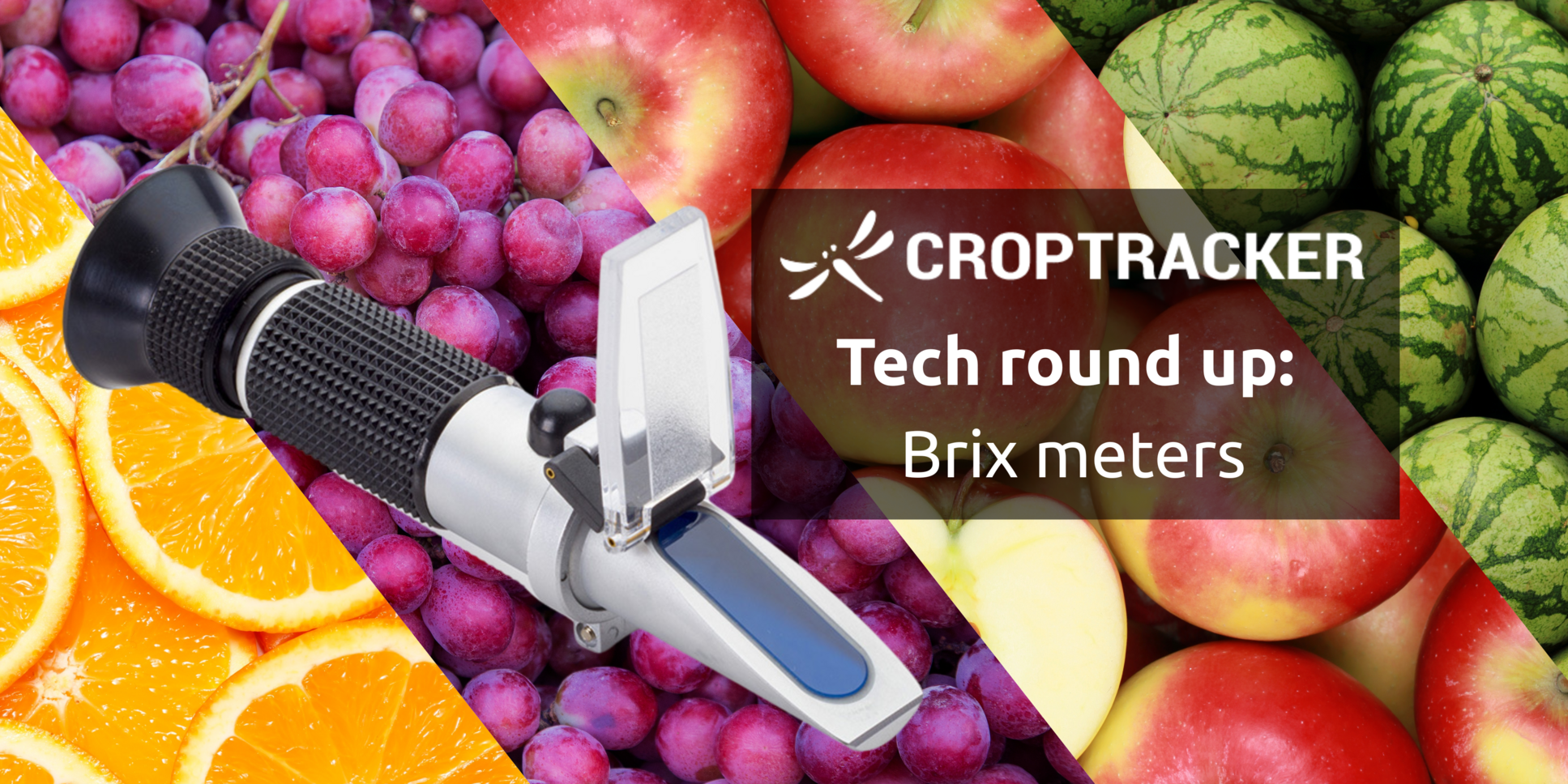
Brix degree measuring is an important quality metric for specialty crop growers and horticulture. Brix° levels inform both harvest planning, storage, packing and sales decision making. The accuracy and utility of field Brix readings depend significantly on managing both environmental inputs and sampling consistency. As a result, ensuring the testing tools work well and sampling processes and reporting are standardized is vital for making properly informed decisions. In this article we detail the factors influencing Brix test results, explain refractometer model options and have compared several popular Brix refractometers popular with fresh produce growers and packers.
Tech round up: Pressure testers
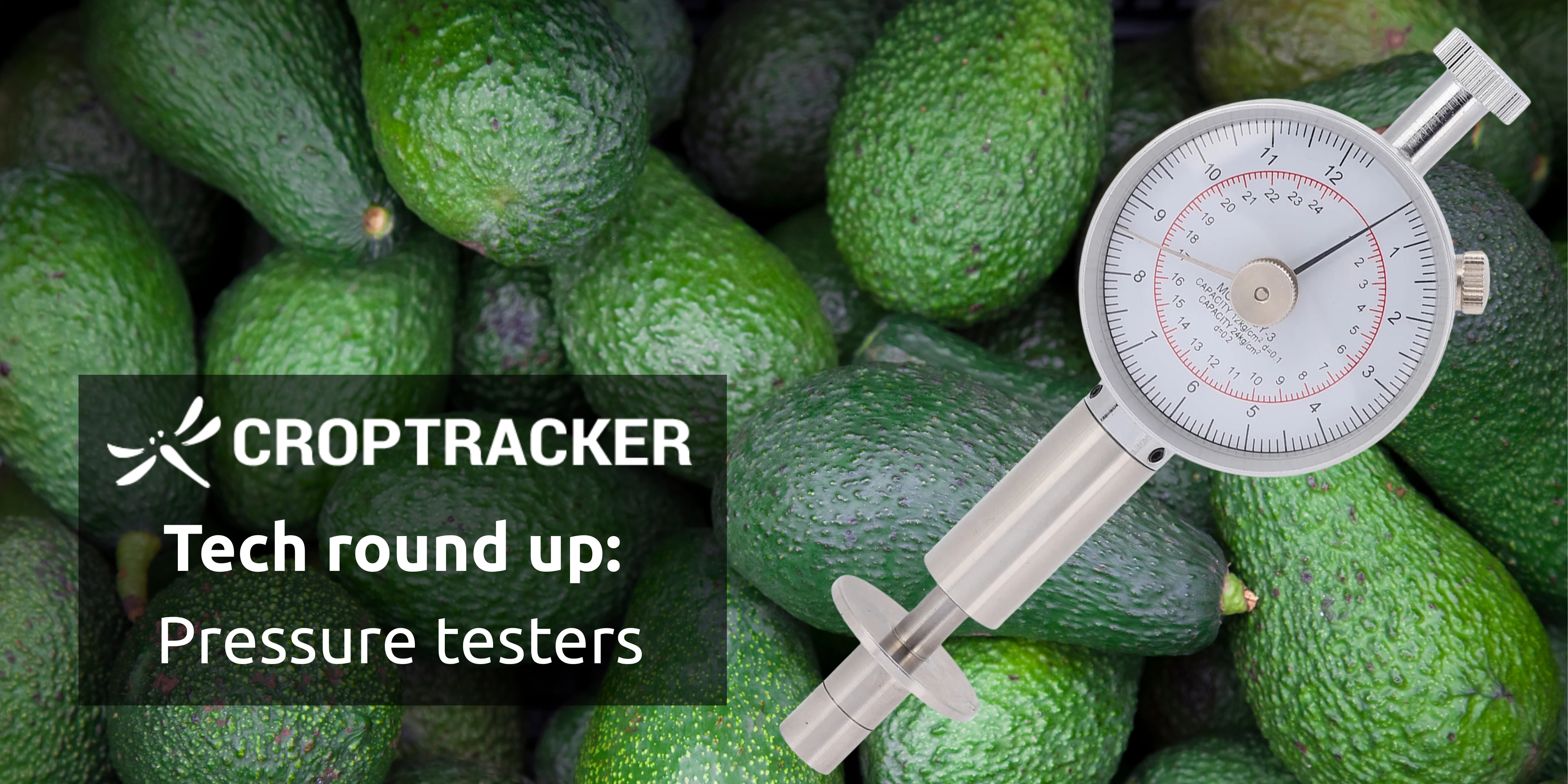
Firmness is widely recognized as one of the most essential quality metrics in the fresh produce supply chain, acting as a universal index for gauging maturity, optimizing harvest timing, and predicting shelf-life potential. The physical structure of a fruit or vegetable determines its ability to withstand handling, storage, and transport, directly influencing its final value.
Mirroring the wider trends in agricultural technology, the processes governing firmness testing are rapidly evolving from purely mechanical methods to digital systems that offer automated readings, data logging, and seamless connectivity via USB or Bluetooth. This technical round-up reviews some of the most popular technologies used for measuring firmness in fresh produce. We have divided the tools into two main categories: Destructive testing and Non-destructive testing.
The Case for Color Grading

Color is one of the driving consumer acceptance factors when it comes to fresh produce. Everyone wants the reddest strawberries, the sunniest yellow lemons, and the broccoli is always greener on the other side of the fence. So how do growers and retailers make sure they’re producing the fruit and vegetables customers desire? Visual inspection is the number one way consumers select their produce - obviously, most of us aren’t bringing a quality control toolkit to Loblaws. At the grocery store, consumers pick the best-looking produce and carry on, so uniformity and consistency are critical.
Traceability and Labor: The Challenges of Berry Harvesting
This blog is part one of a series on berry harvest. Part one on the challenges of harvesting berries by hand. Part two offers solutions to some of these challenges using Croptracker. Find part 2, Croptracker Feature Use Case: Speed Scanning for Berry Harvest here.
Try new agtech tools on for size: adding HQV to your QA toolkit
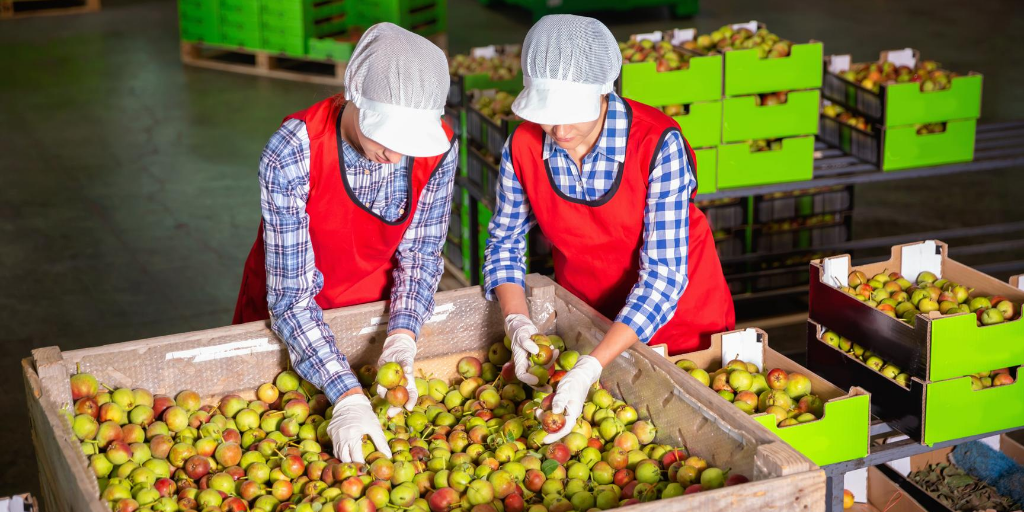
Accurate classification is the key to quality assurance and integral to success in commercial-scale produce markets. Apart from filtering out obvious disease, size is a primary classifier for selling fruit in graded classes. When it comes to sizing fruits like apples and peaches, the tried and true methods are still a big part of the production process. Contemporary tech solutions compliment the human touch while speeding up the processing element of harvest. Having the right tools in your toolkit improves your competitive advantage in the highly time-sensitive world of perishable goods.
What Makes a Fruit a Fruit?
You already know a tomato is a botanical fruit. Your customs broker, your food-safety auditor, and your buyer each have a different answer anyway — and each of them controls money or market access. Botanically, a fruit is the seed-bearing structure that develops from the ovary of a flowering plant after fertilization. Which definition governs your crop is the question this article answers.
What Makes a Fruit a Fruit, Botanically?
Botanically, a fruit is the seed-bearing structure that develops from the ovary of a flowering plant after fertilization. "Vegetable" has no precise botanical definition — it covers every other edible plant part: roots, stems, leaves, buds. The fruit types below describe how that ovary-derived structure forms, not whether the kitchen calls your crop a fruit.
- Simple fruit — develops from the single ovary of one flower (a peach, a tomato)
- Aggregate fruit — many ovaries from one flower (a raspberry)
- Multiple fruit — fused ovaries of several flowers (a pineapple)
- Accessory fruit — develops largely from tissue other than the ovary (an apple, a strawberry)
If you grow pomes, you already handle the accessory-fruit problem every season. The apple's edible flesh develops mainly from the receptacle and hypanthium — flower-stem tissue surrounding the ovary — which makes it an accessory, or "false," fruit. The true fruit is the coreline enclosing the seeds. Pears and quince follow the same pattern. You score maturity on coreline breakdown; botanically, that coreline is the only part that qualifies as fruit.
Strawberry is the mirror image. The flesh is receptacle tissue, and the "seeds" on the outside — achenes — are the true fruits.
Not every fruit starts with fertilization, either. Parthenocarpy is fruit set without fertilization, and it produces seedless fruit. Seedless grapes, bananas, and greenhouse cucumbers are bred for it. If you grow table grapes or parthenocarpic cucumbers for the fresh market, your crop's defining botanical feature — no seeds — is a deliberate breeding choice, not an accident.
For the full taxonomy — pomes, drupes, berries, legumes, caryopses — see Fruit or Vegetable? Fresh Food Facts. We won't repeat it here.
The Court, the Customs Broker, and the EU: Who Gets to Define "Fruit"?
Courts, customs agencies, and regulators define "fruit" by purpose, not botany. The U.S. Supreme Court classified tomatoes as vegetables for tariff purposes in Nix v. Hedden (1893), and fresh tomatoes remain in HTS Chapter 07 today. EU jam law treats tomatoes and rhubarb as fruit. Each definition lands on a different piece of your paperwork.
| Authority | How it defines "fruit" | Where it shows up |
|---|---|---|
| U.S. customs and tariff law | Nix v. Hedden, 149 U.S. 304 (1893): tariff terms carry "the meaning of the common language of the people," so tomatoes are vegetables despite being botanical fruits. Tomatoes sit in HTS Chapter 07 (edible vegetables) today. | Harmonized Tariff Schedule codes at the border |
| EU law | Council Directive 2001/113/EC lets tomatoes, rhubarb, and carrots qualify as "fruit" inputs for jam manufacturing under its Annex III conditions. | EU jam and preserves labeling |
| Trade convention | Buyers, commodity boards, and USDA grade standards classify by commercial commodity group — stone fruit, pome fruit, berries — not by botany. | Buyer specs, grade standards, commodity board programs |
The same peach is a drupe to a botanist, "fresh stone fruit" to a buyer, and HTS Chapter 08 to a customs officer — and every one of those labels lands on your paperwork.
How the FDA Classifies Your Crop — and Why It Isn't By Botany
FDA doesn't classify produce by botany either. Under the FSMA Produce Safety Rule (21 CFR 112.2), FDA publishes an exhaustive list of produce "rarely consumed raw" that falls outside the rule's produce provisions. The carve-out is built on consumption pattern and risk — and it includes several botanical fruits.
- Eggplant — a berry, botanically
- Okra — a capsule fruit
- Pumpkin and winter squash — pepos
- Sour cherries — drupes
- Figs and dates — accessory and true fruits, respectively
- Cranberries — true berries
- Sweet corn — the kernels are caryopses (grains), not botanical fruits in any culinary sense
Same plant, three classifications, three rulebooks: botanist, customs office, regulator.
The pattern repeats downstream in FSMA 204. Its covered-commodity list — melons, leafy greens, tomatoes, cucumbers, fresh herbs — is risk-based, not botanical. Tomatoes are botanical fruits, FSMA Produce Safety Rule-covered produce, and HTS Chapter 07 vegetables at the same time. Your compliance posture depends on which rulebook the question comes from, not on the flower's anatomy.
The Ripening Biology That Actually Pays the Bills
Classification labels don't set your harvest window — ripening biology does. Climacteric fruits such as apples, pears, bananas, peaches, avocados, and tomatoes ripen after harvest through an ethylene-driven respiration spike. Non-climacteric fruits — citrus, strawberries, grapes — barely ripen once picked, so harvest timing is your only lever. And ripeness itself is measurable.
| Climacteric | Non-climacteric | |
|---|---|---|
| Examples | Apple, pear, banana, peach, avocado, tomato | Citrus, strawberry, grape |
| Ripens after picking | Yes — ethylene-driven respiration spike | No — minimal change after harvest |
| Your levers | Harvest timing, ethylene management (1-MCP products, controlled atmosphere), degreening regimes | Pick-time precision only |
| Chemistry trail | Growth regulator applications must be recorded like any chemical input | Rarely applies |
Ripeness is chemistry, and chemistry is measurable. In apples, ripening converts starch to sugar; the starch-iodine (SPI) test reads remaining starch as a maturity proxy. Flesh firmness comes off the pressure test, sugar from soluble solids (Brix), and the Streif index — F/(SSC × S) — combines all three for harvest-window and last-pick decisions. (Starch Iodine Testing, Brix Testing, Pressure Testing)
Put it to work:
- Start SPI testing about four weeks before expected harvest, and repeat at least weekly until the window is set.
- Sample properly: ten trees across the block, sunlit-side fruit cut at the equator, tested within 24 hours, warm fruit (above 10°C), at least 20 apples per sample.
- Match the scale to the variety: Cornell 1–8, CTIFL, Laimburg, UC Davis Granny Smith, MSU varietal scales, and cultivar-specific Honeycrisp and WA 38 scales.
- Group harvested fruit by starch level into storage lots — over-mature fruit exits long-term CA storage eligibility, and packers test starch at receiving.
- Know your ripening class before you manage ethylene: climacteric crops respond to 1-MCP and CA regimes; non-climacteric crops give you pick-time precision and nothing else.
Assessor subjectivity is the weak link in that chain — the same apple scores differently by expert, minutes apart. Starch Quality Vision scores SPI on the Cornell scale with computer vision, so any worker with a mobile scan gets a standardized read, and you can compare tests across growing areas, varieties, and time. Crop Load Vision counts and sizes fruit on tree before you commit to a pick plan, and Harvest Quality Vision captures size and color in the bin at hundreds of fruit per sample. The Quality Control module links those specs to inventory, and the Spray module keeps your ethylene-regulator applications — 1-MCP products included — recorded like any other chemical input. For the post-harvest side, see Managing Fruit Ripening for the Fresh Market.
One Crop, Four Classifications, One Set of Records
However the world classifies your crop, the answer to every classification question lives in the same records. Your broker wants the HTS code. Your auditor wants FSMA coverage status and lot traceability. Your buyer wants the commodity grade. Your agronomist wants maturity stage. Block-level, variety-accurate records answer all four without a second data entry.
| Who asks | What they ask | Which record answers it |
|---|---|---|
| Customs broker | HTS code and commodity | Crop and variety records plus harvest records |
| Food-safety auditor | FSMA coverage, traceability lot codes | Traceability records at Critical Tracking Events |
| Buyer | Grade and commodity convention | QC specs tied to inventory and lot |
| Agronomist | Maturity stage and storage grouping | SPI, firmness, and Brix test records |
That is the case for Croptracker's Farm Management ERP: one source of truth, structured the way your crop actually flows.
Field Map holds crop and variety records at block level — variety, rootstock, spacing, target fruit set — and that record is the ground truth every downstream module reads. Whether your block grows a drupe, a pome, or a caryopsis, the classification starts there.
Harvest Crop Yield Records link bin tags to block, picker, and inventory, with four scan-based workflows and real-time yield by block and commodity. At Taggares Fruit Company in Burbank, Washington, that meant 2,000 bins a day captured by scan instead of hours of hand-counting tickets (see their customer story).
Produce Packing Traceability Records assign traceability lot codes and capture Key Data Elements at Critical Tracking Events — the FSMA 204 vocabulary your auditor and your buyers now use. When a regulator asks whether your crop is covered produce and a buyer asks where a lot came from, both answers trace back to the same records. Storage grouping by maturity level in Storage Records closes the loop from test data to lot destiny.
The Takeaway for Growers
"Fruit or vegetable" is trivia. "Which classification does this audience use, and can my paperwork answer it" is operations. At Mr Apple in New Zealand, digitized records saved 600–800 hours per week during harvest — time the classification questions above used to eat in triplicate. Your crop doesn't change when the audience does; your records just have to keep up. Book a private demo to see the Farm Management ERP in action.
FAQs About Fruit Classification
Q: Is a tomato a fruit or a vegetable?
A: Botanically, a fruit — it develops from the flower's ovary and carries seeds. Legally, a vegetable for U.S. tariff purposes since Nix v. Hedden (1893), which is why fresh tomatoes sit in HTS Chapter 07. FDA treats it as covered produce under the FSMA Produce Safety Rule because it's commonly eaten raw.
Q: Why is an apple called a false fruit?
A: Most of the apple's edible flesh develops from the receptacle — flower-stem tissue — rather than the ovary, making it an accessory fruit. The true fruit is the coreline enclosing the seeds, which is the same tissue you score for maturity.
Q: Which fruits ripen after picking?
A: Climacteric fruits — apples, pears, bananas, peaches, avocados, tomatoes — continue ripening through an ethylene-driven respiration spike. Non-climacteric fruits such as citrus, grapes, and strawberries do not ripen appreciably after harvest, so harvest timing is the only ripeness lever.
Q: Does the FSMA Produce Safety Rule apply to pumpkins or sweet corn?
A: No. Both appear on FDA's exhaustive "rarely consumed raw" list in 21 CFR 112.2, so the rule's produce provisions don't cover them — regardless of their botanical classification.
References
- Encyclopaedia Britannica, "Fruit": https://www.britannica.com/science/fruit-plant-reproductive-body
- Encyclopaedia Britannica, "Is a tomato a fruit or a vegetable?": https://www.britannica.com/story/is-a-tomato-a-fruit-or-a-vegetable
- Wikipedia, "Accessory fruit": https://en.wikipedia.org/wiki/Accessory_fruit
- Encyclopaedia Britannica, "Parthenocarpy": https://www.britannica.com/science/parthenocarpy
- Wikipedia, "Climacteric (botany)": https://en.wikipedia.org/wiki/Climacteric_(botany)
- Penn State Extension, "Fruit Harvest — Determining Apple Fruit Maturity and Optimal Harvest Date": https://extension.psu.edu/fruit-harvest-determining-apple-fruit-maturity-and-optimal-harvest-date
- Cornell University, "Starch-Iodine Index" (eCommons): https://ecommons.cornell.edu/server/api/core/bitstreams/242b2cd3-40b2-4843-a2dc-bde02d4c2f0d/content
- ASHS HortScience, Streif index maturity coefficient: https://journals.ashs.org/hortsci/view/journals/hortsci/34/7/article-p1251.pdf
- Wikipedia, "Nix v. Hedden": https://en.wikipedia.org/wiki/Nix_v._Hedden
- eCFR, 21 CFR 112.2 (FSMA Produce Safety Rule, rarely consumed raw list): https://www.ecfr.gov/current/title-21/chapter-I/subchapter-B/part-112/section-112.2
- FDA, "FSMA Final Rule Produce Safety": https://www.fda.gov/food/food-safety-modernization-act-fsma/fsma-final-rule-produce-safety
- EU Council Directive 2001/113/EC (fruit jams, jellies, and marmalades), via Wikipedia "Nix v. Hedden": https://en.wikipedia.org/wiki/Nix_v._Hedden
- USITC Harmonized Tariff Schedule: https://hts.usitc.gov
Request your free private demo now!
Let our expert staff walk you through the Croptracker system, and answer any questions you have.
We are here to help.