Specialty crop growers are in the midst of a long transition period, moving from a historic reliance on synthetic agrochemicals, towards more dynamic approaches like Integrated Pest Management (IPM). Orchardists and apple growers in particular have been at the forefront of this shift, being some of the first to adopt biological treatments like pheromone sprays.
In the apple industry, the move towards biologicals is not just a response to environmental advocacy, but is a calculated adaptation due to an evolving regulatory landscape; a growing consumer demand for “residue free”produce; and increasing agrochemical and fertilizer costs. When used well, IPM strategies, including biological treatments, can help growers reduce traditional treatment costs and increase yield and quality.
This article will detail the types of biologicals most commonly used in apple orchards, the regulations covering their use in Canada, and how Croptracker can help growers make the most of their biological applications.
Defining biologicals
In the Canadian orchard context, biologicals are divided into three overarching functional groups: biopesticides (for direct pest suppression), biostimulants (for stress management), and biofertilizers (for nutrient availability). Biopesticides is a broad category that includes microbial agents and semiochemicals, while biostimulants and biofertilizers are often grouped due to their shared focus on enhancing plant physiology and resilience rather than direct pest suppression.
Biopesticides
Microbial Pesticides
Microbial pesticides utilize living organisms, (bacteria, fungi, viruses, or protozoa) as the active agent. These products are particularly valued in apple orchards for their high specificity. For example, the Codling Moth Granulovirus is a highly specialized microbial that targets only the larvae of the codling moth, infecting the insect through ingestion and causing systemic failure without impacting beneficial predators like lady beetles or lacewings.
Many bacteria, such as Bacillus subtilis, function through antibiosis, meaning they produce metabolites like lipopeptides that directly inhibit the growth of pathogenic fungi and bacteria. Others, like Aureobasidium pullulans, operate via niche competition, physically occupying the stigmas of apple blossoms to prevent pathogens like fire blight (Erwinia amylovora) from entering the plant.
Semiochemicals and Behavioral Controls
Semiochemicals are message-bearing chemicals that alter insect behavior. The most common application in apple orchards is mating disruption through the use of synthetic insect mating pheromones. By saturating the orchard air with pheromones, growers can prevent male codling moths from finding females, effectively halting the reproductive cycle. This approach is increasingly favored due to its non-toxic nature and minimal impact on worker safety.
Biostimulants and Biofertilizers
Biostimulants represent a rapidly growing sector, designed to improve the physiological health and abiotic stress tolerance of the tree. Unlike pesticides, they do not target a specific pest but instead stimulate the tree's natural processes, such as photosynthesis and root development. Biofertilizers focusing on microbials like Rhizobium or mycorrhizal fungi enhance the soil’s biological activity, facilitating the uptake of vital plant nutrients like nitrogen.
The ‘other’ biological: predatory insects
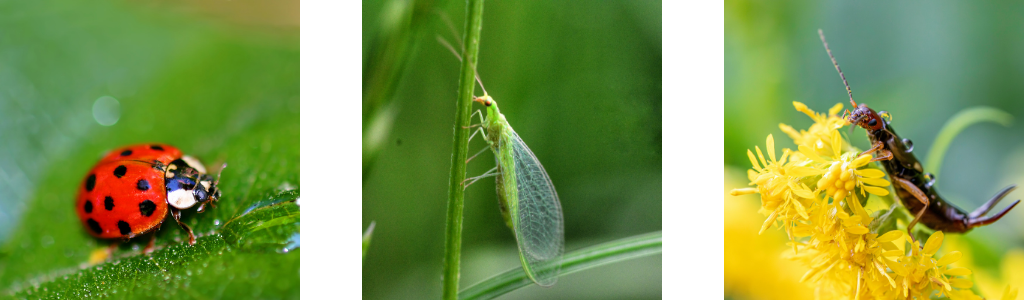
In IPM for apple orchards, the use of predatory insects serves as a critical biological control strategy to suppress pest populations naturally, though it does not get categorized with the microbial pest predators mentioned above. These larger generalist predators, which are typically as big as or bigger than their prey, include diverse groups such as lady bugs (Coccinellidae), lacewings (Chrysopidae), and earwigs (Forficulidae).
Biological and conventional treatments are better together
The most successful IPM programs do not use biologicals as a total replacement for conventional sprays but rather as a complement. Growers can build a more balanced approach with preventative biological approaches and reliable crop protection for unavoidable infections.
Cost reductions and improved yields
Biostimulants improve the health and physiological processes of the trees, allowing them to better use applied synthetic and organic fertilizers, and nutrients already available in the soil. Improving the trees nutrient uptake abilities increases crop yield and quality potential and ultimately grower returns.
Biofertilizers help improve the soil structure and make up, preventing leaching and increasing the availability of nutrients the trees can use. More efficient nutrient uptake can lead to less fertilizer applications and cost reductions. This is particularly helpful for reducing high cost chemicals like nitrogen (N) and phosphorus (P).
Resistance management
Integrating biopesticides into conventional spray schedules helps manage pathogen resistance. It fulfills the IPM strategy of rotating Modes of Action (MoA). Simply put, this means changing the active ingredient or agent used to target particular pests. Many biological products are designed to be tank-mixed with lower label rates of conventional pesticides, which can enhance the overall efficacy of the treatment while potentially reducing the total volume of synthetic chemicals applied per season. However, compatibility is critical; certain biological fungicides should not be mixed with particular synthetic compounds or biocides that might kill the live microbial agent.
The regulatory landscape for biologicals in Canada
The governance of biological crop treatments in Canada is a dual-layered system where federal registration ensures product safety and value, while provincial regulations dictate the operational specifics of sale, use, and record-keeping. Central to this is the Pest Management Regulatory Agency (PMRA), a branch of Health Canada operating under the authority of the Pest Control Products Act.
The PMRA evaluates a vast array of scientific data to determine if a product’s health and environmental risks are acceptable and if the product demonstrates tangible value for the grower. Additionally, under the Plant Protection Act, the Canadian Food Inspection Agency (CFIA) regulates the movement of pests and any "biological obstacle" to pest control to prevent the introduction of invasive species, which can also impact the introduction of new biological products to the market.
Regulations for biologicals organic orchard management
Organic apple production in Canada is strictly governed by the Canadian Organic Standards (COS) and the associated Permitted Substances Lists (PSL). These regulations prohibit most synthetic inputs and emphasize cultural, mechanical, and biological controls.
While "natural" is a baseline requirement for biologicals, not all treatments are safe for certified organic use. Prohibited materials include:
- Genetically Engineered (GE) Organisms:
All products of genetic engineering (GMOs) are strictly banned. This includes modern gene-editing techniques like CRISPR and any microbial products derived from biofermentation involving GE microorganisms. For example, fermentation-produced chymosin (FPC) is prohibited because it involves inserted genes. - Specific inert ingredients and preservatives:
A biological active ingredient may be prohibited for organic use if it is formulated with synthetic stabilizers or preservatives, often petroleum derived ingredients.
Worker safety and occupational health standards
A common misconception is that biological equates to harmless, however, while biologicals are generally less toxic to humans and animals, they can still be skin and eye irritants or potential allergens. Compliance with safety regulations and equipment requirements on the product label is legally mandated under the Pest Control Products Act for biologicals as they are with conventional chemical treatments.
Restricted-Entry and Pre-Harvest Intervals
One of the significant advantages of biologicals is the reduction of the Restricted-Entry Interval (REI) and Pre-Harvest Interval (PHI). While traditional organophosphates may have REIs of several days, most biologicals allow for re-entry within 4 to 12 hours, or as soon as the spray has dried.
Under WorkSafe BC and Ontario's occupational health regulations, if no REI is specifically stated on a biopesticide label, the default is 24 hours for "slightly toxic" products and 48 hours for "moderately toxic" products. This quick REI period is particularly helpful for growers who need to manage labor for applications with hand thinning and pruning in the spring.
Mandatory Record-Keeping and Compliance Frameworks
Comprehensive record-keeping is not just a regulatory requirement but a core component of effective Integrated Pest Management. Records allow growers to evaluate the effectiveness of their biological programs over time and are necessary for various certification programs.
Essential data elements for all spray records
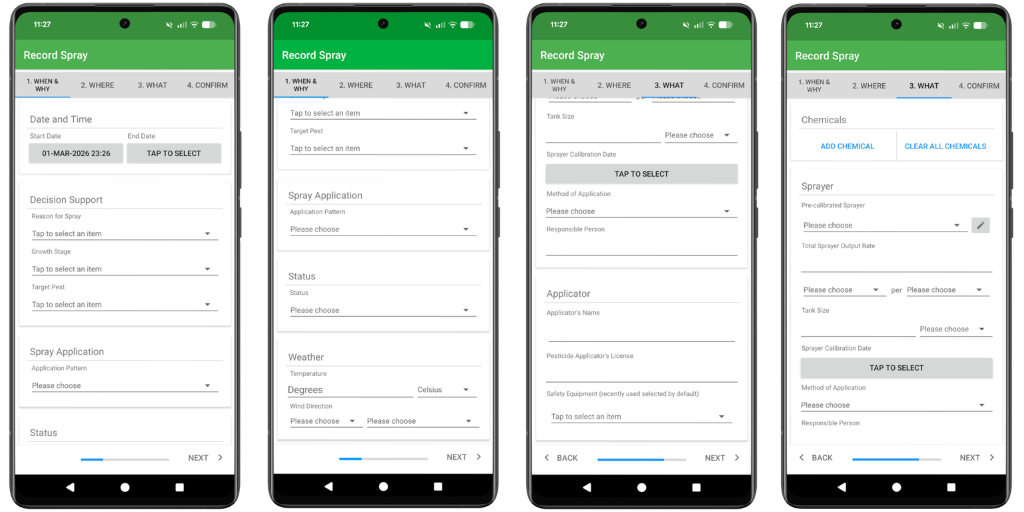
In Canada, application records must be completed within 24 hours of the treatment and typically must be retained for three to five years depending on the province. Below are the required elements for each application record.
| Data Field | Specific Requirement | Source and Context |
|---|---|---|
| Date and Time | Year, Month, Day, and Start/End times. | Critical for verifying PHI compliance and following weather models. |
| Location | Field/Block description and size (acres/hectares). Block boundaries must be mapped and have GPS coordinates associated. | Required for tracking total volume applied per season. |
| Product information | Trade Name, Registration Number and Active Ingredients. Chemical labels must also be saved and easily retrievable. | Ensures the exact formulation is traceable in case of an audit. |
| Application details | Rate (e.g., L/ha), Method (e.g., Airblast), and Total Quantity. | Necessary to ensure label rate compliance. |
| Environmental conditions | Wind speed/direction, Temperature, and Precipitation. | Documents that the spray occurred during suitable weather to prevent drift. |
| Personnel | Name and License Number of the certified applicator. | Establishes accountability for the application. |
| Safety equipment | Documentation of what safety equipment is required for applicators. | Ensures worker health and safety. |
Considerations for field application and environmental stewardship
Biological treatments are generally more sensitive to environmental conditions than synthetic chemicals. Their efficacy depends on precise timing, thorough coverage, and the management of "tank-mix" compatibility.
Timing and modeling
The post-infection activity period for most biologicals is significantly shorter compared to synthetic treatments. Therefore biological controls are often used as a preventative measure, and relies on precise degree-day modeling and weather station data to predict pest emergence and infection windows for application timing.
Environmental restrictions and water protection
The PMRA is increasingly focused on environmental oversight, particularly regarding water protection. A national water monitoring framework is currently being developed to collect data on pesticide residues in Canadian lakes and rivers. While many biologicals have low aquatic toxicity, certain plant extracts and oils may still have mandatory buffer zones to protect sensitive aquatic habitats from spray drift.
Growers must also manage the risk of phytotoxicity. Sulfur, for instance, should never be applied when temperatures are expected to exceed 26℃ as it can cause leaf burn and russeting. Similarly, horticultural oils used for mite and scale control can be phytotoxic if applied too close to a sulfur treatment.
Improving biological applications with Croptracker
The economic rationale for biologicals is shifting from a premium organic niche to a yield-protection necessity in conventional farming. Globally, the biologicals market is projected to reach $30 billion by 2035, representing nearly 25% of the total crop protection market. For many growers, developing a strategy for integrating more biologicals is necessitating a closer look at their historic records and current data collection processes.
Digitized scouting with the Quality Control module
Using Croptracker’s Location Inspection features, growers can fine tune their scouting inspection templates so workers are better informed. Growers can view records remotely and aggregate data to monitor key information over time. If you can spot pest increases quickly, you can use biological controls in time to stop them from becoming a major problem.
Detailed application tracking with the Spray module
Croptracker’s Spray module allows growers to seamlessly integrate biological treatments into their digital chemical inventory, including the ability to upload product labels, and specific active ingredient concentrations. Croptracker helps ensure inventory levels and chemical costs are tracked in real-time, providing a clear financial picture of the biological program.
Beyond simple record-keeping for regulatory compliance, the module enables orchardists to evaluate the effectiveness of various treatment combinations by comparing spray logs directly against historic scouting records. This data-driven approach is particularly valuable for association and community-level IPM. For example by generating and analyzing shareable reports, growers can coordinate with neighbors to synchronize pheromone releases or microbial applications, creating a unified front against mobile pests and regional disease pressure.
Historic yield and quality data with the Harvest module
The ultimate measure of any biological program is the quality and volume of the final crop. Using Croptracker’s Harvest module, growers can analyze historic yield records by specific block or variety over multiple seasons. This high-level visibility allows for a direct comparison between harvest outcomes and the season’s scouting data and treatment logs.
By overlaying biological application timing with final pack-out results, growers can identify correlations between specific biostimulants and improved fruit finish or size. Additionally, tracking the labor time and product costs associated with these applications provides the financial transparency needed to refine long-term IPM strategies, ensuring that biological integrations are both agronomically sound and economically sustainable.
As the apple industry continues to pivot toward Integrated Pest Management, the successful integration of biologicals depends on more than just swapping one product for another. It requires a fundamental shift toward precision and proactive oversight. By leveraging Croptracker’s comprehensive platform growers can turn data into a strategic advantage. This digital infrastructure not only simplifies the burden of record-keeping but also provides the long-term data visibility needed to prove that biological inputs are a sound investment for both the land and the bottom line.